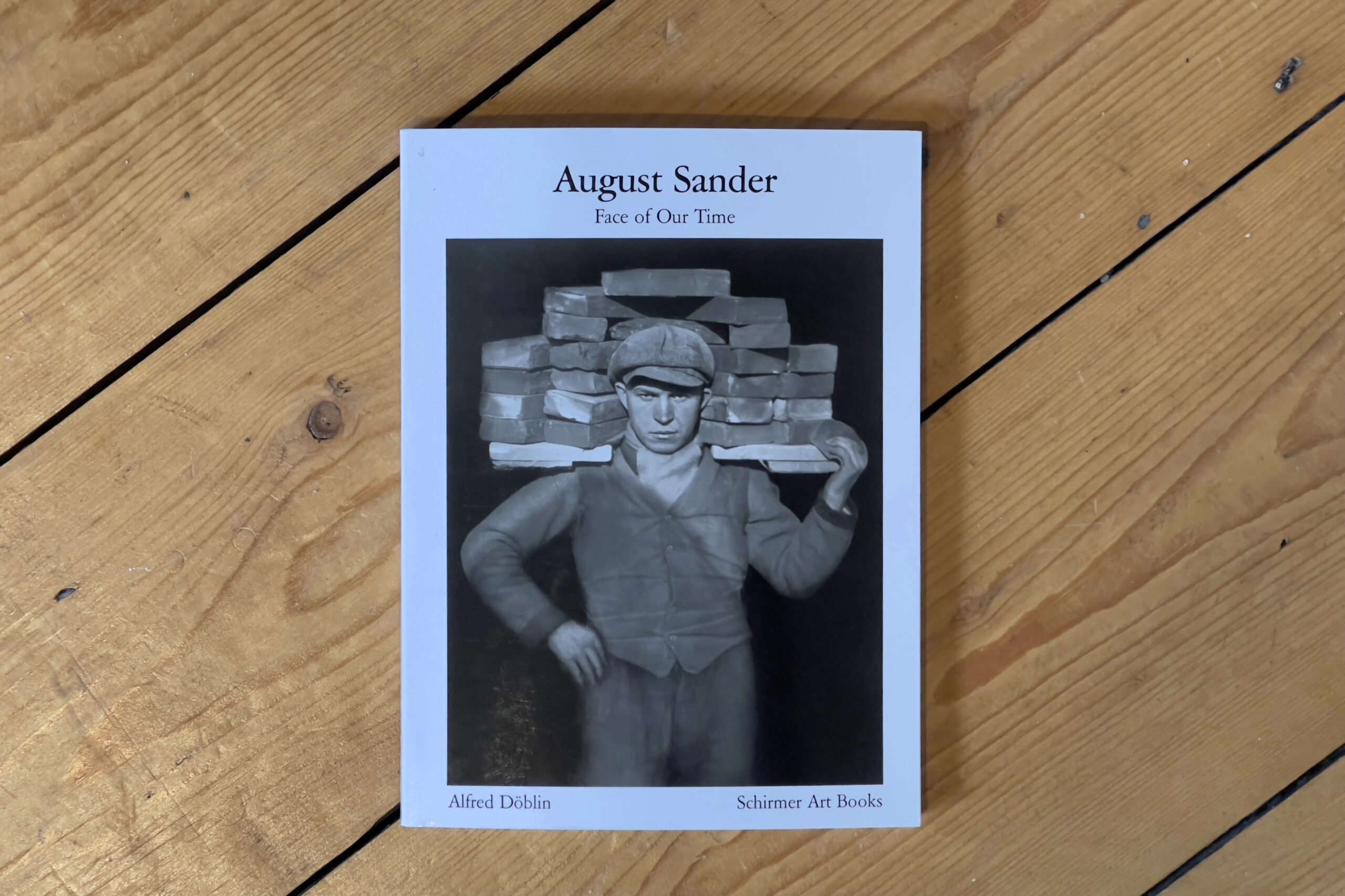
One of the things that stuck me about Face in our time is the looseness of the rules applied particularly when viewed in comparison to Bernd & Hilla Becher’s Typologies.
Sander’s subjects are photographed in groups and alone, posed against walls and in situ in the world. Some sit, some stand, some pose theatrically, and some merely pose.
He included images of subjects facing the camera, and subjects looking away and different crops and aspect ratios, and indeed different lenses achieving different subject compressions.
Even with this forgiving attitude to the technical and compositional aspects of the work, he builds, through dint of volume, the basis of a coherent typology.
The fact that these works were made at a time when labour and identity were perhaps more intertwined and immutable, (also during the a period peppered with concepts of physiognomy and eugenics) it’s interesting to note that also treats his subjects differently depending upon their class.
Higher status identities are treated differently to lower status ones, with some subjects being allowed to keep their initial and thus their identity as others are merely denoted as their labour.